

If you want a healthy return from your SEO and overall content marketing efforts, you need to create content that drives direct signups and MRR
Building huge un-focused blogs is no longer a profitable approach for SaaS companies.
I’ve been driving high-intent organic traffic to websites for over 12 years – including my own SaaS business, which I recently sold.
And there has been a big shift in what works in SEO – and what doesn’t.
Here are the six content types your SaaS website needs to generate consistent growth in 2026 and beyond.

What’s changed in content marketing and SEO?
Before we delve into the 6 revenue-driving content types – it’s important to understand the recent changes in organic, and how they impact SaaS marketing.
AI search has reduced visits to informational content.
Just a few years ago, companies could scale traffic by publishing large volumes of informational blog posts on topics like “how to improve sales calls” or “ways to reduce staff costs”
While these top-of-funnel queries converted poorly, the sheer volume of traffic made the model viable for generating sales.
This was actually a big part of our early SEO strategy at StandOut CV
Today, that dynamic has changed.
Informational queries are increasingly answered directly in AI overviews and ChatGPT, meaning users often get what they need without clicking through to a website.
“Over 60% of Google searches now end without a click”
The result?
Many content-heavy sites have seen noticeable declines in organic traffic over the past 2–3 years.
AI content overload is eroding trust in written content
It’s no secret that many SEO-reliant websites have abused the power of AI writing tools.
Many companies have published thousands of low-quality, repetitive articles in an attempt to capture search traffic -flooding search results with re-hashed content that adds little original value.
This has created a growing trust issue.
Users are increasingly sceptical of generic blog content and are actively seeking more authentic, experience-driven sources.
“Only 34% of people trust the information they find via search engines”
Informational website content has lost its impact
The combination of fewer clicks and lower trust has significantly reduced the effectiveness of informational content for SaaS companies.
User behaviour has changed.
Instead of relying solely on blog posts, people are turning to more trusted and engaging sources:
- Social platforms like X and LinkedIn
- Community-driven sites like Reddit and Quora
- Video platforms like YouTube
What content performs best for SaaS SEO?
Fortunately it’s not all doom and gloom for SaaS businesses.
Sure, when people search for quick answers, like “what is customer LTV” they will no longer need to visit your website – they’ll get an answer from ChatGPT in seconds.
But when they are looking for solutions and products, that’s when they need to visit websites.
That’s where middle and bottom-of-funnel content becomes far more valuable.
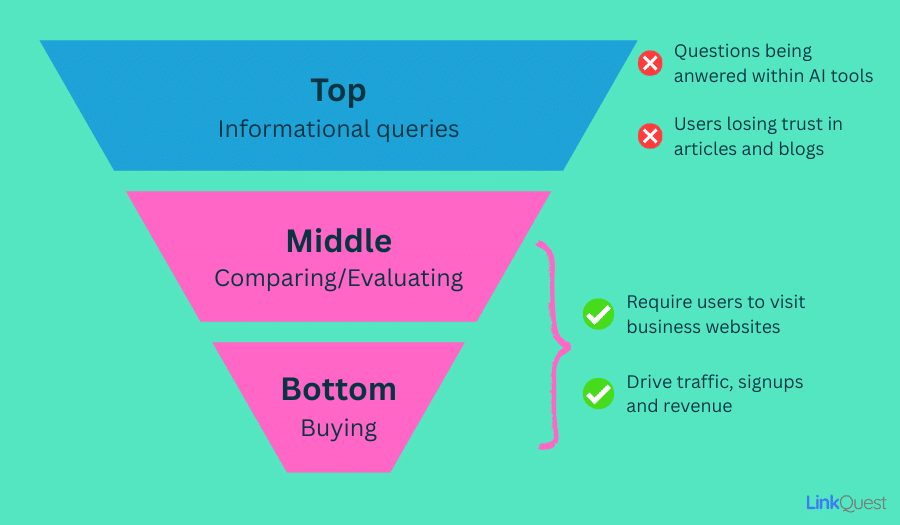
- Middle of funnel (MoF): Content that helps users evaluate solutions and understand options.
Examples: “Best CRM software for startups”, “HubSpot vs Salesforce comparison”, “How to choose a helpdesk platform” - Bottom of funnel (BoF): Content that drives direct purchase intent.
Examples: product pages, pricing pages, demo landing pages, case studies, and “{product} alternatives” pages
This content drives buyers directly to your website – not researchers
People who are aware they have a problem – and are ready to pay to solve it.
It also plays a crucial role in shaping how AI models interpret and recommend your product, long before users even reach your website.
SaaS SEO moves fast. Don’t get left behind
Follow me on LinkedIn to see what’s working this week, not last year.

The 6 types of revenue-driving content for SaaS
These are the middle and bottom of funnel content formats that are still driving high-intent traffic to SaaS websites in 2026.
Core product buying pages
Typical content formats
- Homepage for SaaS products
- Product category pages
- Software/platform landing pages
Examples
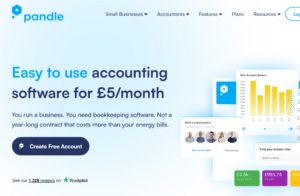
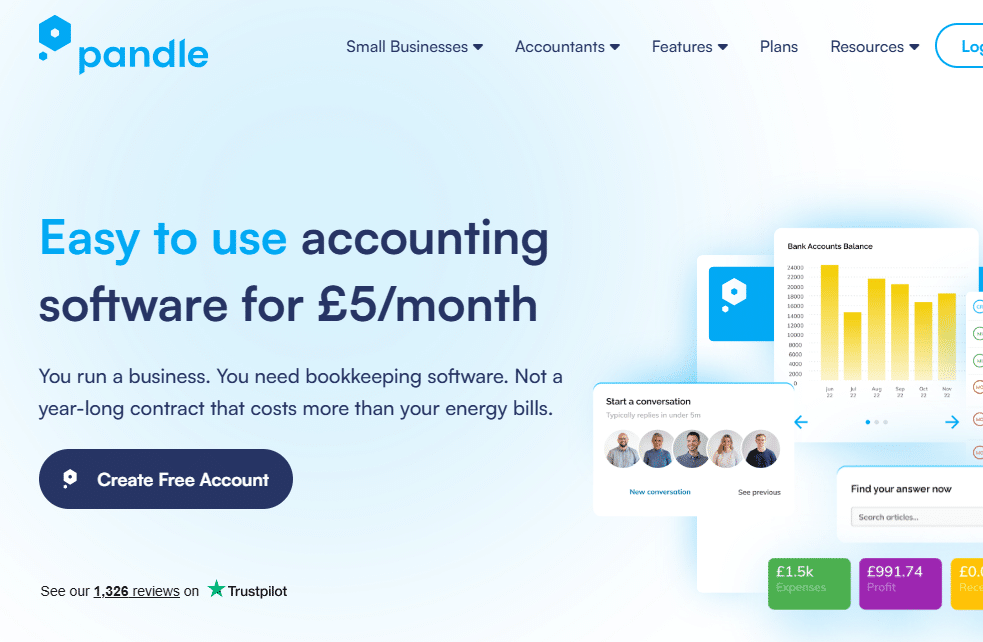
- accounting software (Pandle)
- digital signage software (Now Signage)
- ai software testing tool (Monentic)
Example revenue forecast
| Keyword | Traffic potential | Signups p/m | Estimated LTV | Booked revenue increase p/m |
|---|---|---|---|---|
| accounting software | 40,000 | 1,200 | £180.00 | £216,000 |
These forecasts are created using Ahrefs traffic data, a conservative conversion rate of 3% and estimated LTV. For a more accurate SEO revenue forecast for your own SaaS business, get our free 90 Day SEO Revenue Plan.
These are the most commercially valuable pages on any SaaS website. They target users who are already in the market for a solution and are actively searching for products in your category—people who know what they need and are now deciding which tool to choose.
Rather than educating or nurturing, these pages are designed to capture demand that already exists. They sit at the bottom of the funnel and play a direct role in driving demos, trials, and sign-ups.
Typical examples include:
- “CRM software”
- “Project management software”
- “Email marketing platform”
- “Best helpdesk software”
These are not casual searches. They come from users who have a clear problem, understand the type of solution they need, and are now evaluating options.
Why they matter
If you rank well for these terms, you’re placing your product directly in front of buyers at the exact moment they’re making a decision.
This is where SaaS SEO shifts from a traffic channel to a revenue engine.
Instead of attracting thousands of low-intent visitors, a single high-ranking product page can consistently generate qualified leads and paying customers every month.
How to approach them
Because of the competition, these pages are best treated as a mid-to-long term investment.
Early-stage SaaS companies should still build them, but rely on supporting content (like comparisons and alternatives) to generate quicker wins while authority builds.
Over time, as your site gains backlinks and topical authority, these core product pages become some of the most valuable assets in your entire growth strategy – driving consistent, high-intent traffic that converts directly into revenue.
The caveat: high competition
The downside is that these keywords are typically the most competitive in any SaaS niche.
Due to the rewards at stake, every business in your category will be competing hard to rank for these terms
As a result, ranking for core product terms usually requires:
- Strong domain authority and backlinks
- High-quality, conversion-focused content
- Supporting content (comparisons, alternatives, use cases)
- Time to rank is often 6–18+ months depending on the niche
“Best” listicle content

Typical content formats
- “Best X software” pages
- “Best software for [Task]
Examples
- best proposal software (Get Accept)
- best ai chatbots for business (Lindy)
- best ai voice generator (Well Said)
Example revenue forecast
| Keyword | Traffic potential | Signups p/m | Estimated LTV | Booked revenue increase p/m | ||
|---|---|---|---|---|---|---|
| best proposal software | 1,500 | 45.00 | £8,000.00 | £360,000.00 |
These forecasts are created using Ahrefs traffic data, a conservative conversion rate of 3% and estimated LTV. For a more accurate SEO revenue forecast for your own SaaS business, get our free 90 Day SEO Revenue Plan.
“Best” listicles target users who are actively comparing options and building a shortlist of tools before making a final decision.
These searches sit in the middle-to-late stages of the funnel, where buyers know the type of solution they need, but are still researching different solutions
Unlike core product pages, which capture users ready to choose a solution, listicles capture users deciding which solution is right for them.
Typical examples include:
- “Best CRM software for small businesses”
- “Top project management tools”
- “Best email marketing platforms for ecommerce”
- “Best helpdesk software for startups”
These queries are highly valuable because they attract engaged buyers who are actively evaluating vendors and are often just a few steps away from signing up or booking a demo.
Why they matter
These pages play a crucial role in shaping vendor consideration.
They allow SaaS brands to position themselves alongside competitors and influence how potential customers perceive their strengths, use cases, and value.
A well-optimised “best” list doesn’t just generate traffic – it actively guides decision-making.
Strong listicles typically:
- Present a curated shortlist of relevant tools
- Highlight key features, pricing, and ideal use cases
- Include balanced comparisons that help users make confident decisions
Because users are in evaluation mode, these pages often contribute to conversions even if they’re not the final touchpoint.
A buyer might discover your product in a listicle, then return later via branded search or direct traffic to convert.
AI search win: These lists highly influence LLMs when users search ask recommendations
How to approach them
“Best” listicles should be a core part of any SaaS SEO strategy, particularly for generating mid-funnel traffic and accelerating conversions.
They work best when:
- Paired with supporting content (comparisons, alternatives, product pages)
- Regularly updated to stay accurate and useful
- Built around specific audiences or use cases (rather than broad, generic terms)
Over time, these pages can become powerful acquisition assets -consistently bringing in qualified buyers and influencing revenue long before the final conversion happens.
To succeed, your content needs to go beyond generic lists and offer:
- Genuine insight and differentiation
- Clear positioning for each tool
- Strong UX and scannability
- Evidence of real expertise and actual use of each product (not just rehashed summaries)
Feature and use-case content
Typical content formats
- Use-case landing pages
- Feature-led solution pages
Examples
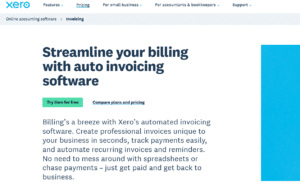
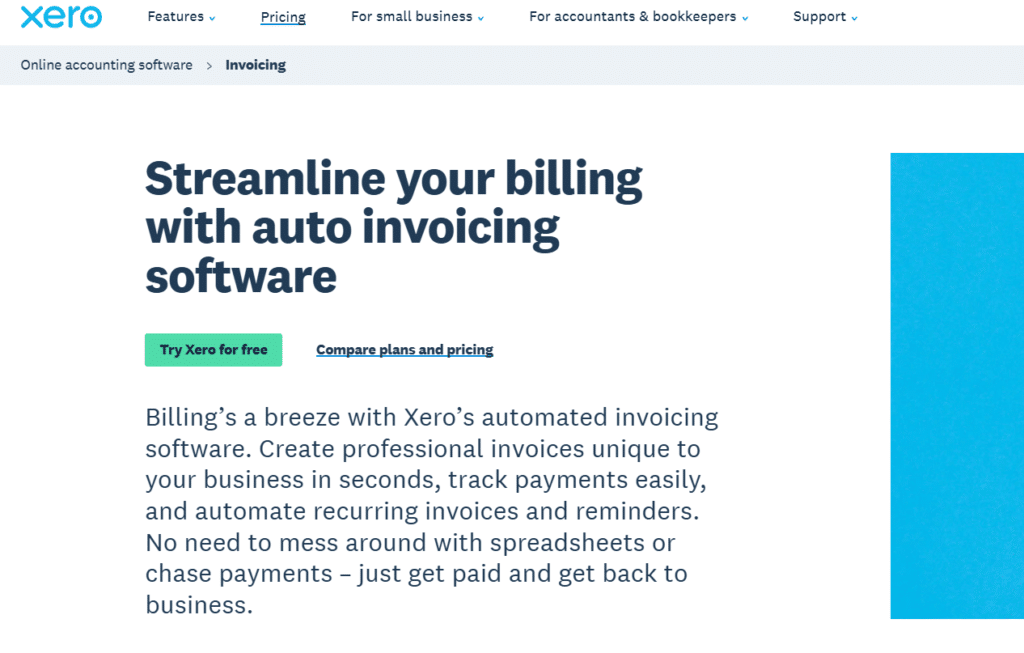
- automated invoicing software (Xero)
- expense tracking for small businesses (Mercury)
- tax compliance software for SMEs (Avalara)
Example revenue forecast
| Keyword | Traffic potential | Signups p/m | Estimated LTV | Booked revenue increase p/m | |
|---|---|---|---|---|---|
| automated invoicing software | 2,600 | 78 | £3,000 | £234,000 |
These forecasts are created using Ahrefs traffic data, a conservative conversion rate of 3% and estimated LTV. For a more accurate SEO revenue forecast for your own SaaS business, get our free 90 Day SEO Revenue Plan.
Feature and use-case content targets users searching for a specific capability or outcome.
People who are trying to solve a defined problem and are evaluating tools that can deliver it.
These searches sit in the middle-to-bottom of the funnel. The user already understands their need and is now looking for a solution that fits their exact requirements.
Typical examples include:
- “CRM with automation workflows”
- “Email marketing with segmentation”
- “Project management tool with time tracking”
- “Tools for managing remote teams”
These queries are highly valuable because they reflect clear intent.
The user isn’t exploring the category – they’re actively looking for a tool that can solve a specific problem.
Why they matter
This type of content sits in a sweet spot between volume and intent.
While individual keywords may have lower search volume than broad product terms, they often:
- Convert at a higher rate
- Attract more qualified leads
- Shorten the path to conversion
They also allow you to capture demand that broader pages miss – especially when buyers are searching for very specific capabilities.
Because these users are problem-aware and solution-focused, they’re often much closer to taking action than typical top-of-funnel visitors.
How to approach them
Feature and use-case content should be a core part of your SEO strategy for driving qualified traffic.
They work best when:
- Built around real customer problems and language
- Focused on one feature or use case per page
- Structured as dedicated landing pages (not just blog posts)
- Clearly show how your product delivers the outcome
- Supported with examples, workflows, or proof points
Over time, these pages become a consistent source of high-intent traffic – bringing in users who are actively looking for a solution and positioning your product as the most relevant choice.
Get the 90-Day SaaS SEO Revenue Plan
A proven framework for SaaS teams who need to drive organic MRR fast
Competitor alternatives content
Typical content formats
- “X alternatives” pages
- Comparison-style landing pages
Examples
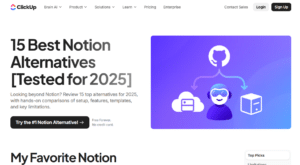
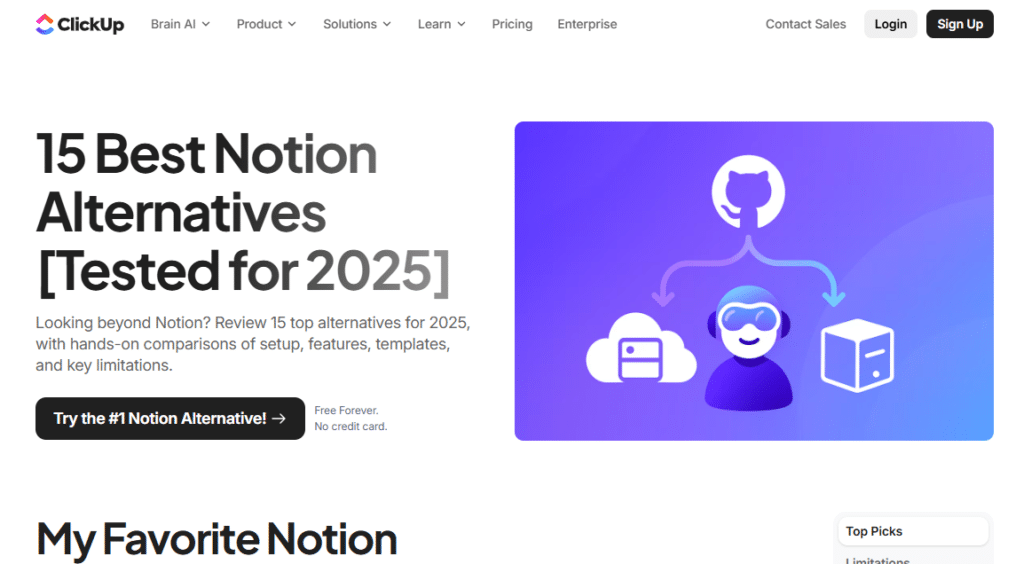
- Notion alternatives (ClickUp)
- Xero alternatives (Plutio)
- Trello alternatives (Good Day)
Example revenue forecast
| Keyword | Traffic potential | Signups p/m | Estimated LTV | Booked revenue increase p/m | |
|---|---|---|---|---|---|
| Notion alternatives | 2,000 | 60 | £8,640.00 | £518,400.00 |
These forecasts are created using Ahrefs traffic data, a conservative conversion rate of 3% and estimated LTV. For a more accurate SEO revenue forecast for your own SaaS business, get our free 90 Day SEO Revenue Plan – which outlines the framwork we use for clients at our SaaS SEO agency.
Competitor alternatives content targets users searching for other options to a specific product.
Often because they’re dissatisfied, outgrowing their current tool, or exploring better-fit solutions.
These searches sit firmly at the bottom of the funnel. The user already understands the category, has experience with a product, and is now actively looking to switch.
Typical examples include:
- “HubSpot alternatives”
- “Alternatives to Mailchimp”
- “Tools like Asana”
- “Best alternatives to Salesforce”
These queries are extremely high-intent. Users aren’t just evaluating – they’re actively looking to replace an existing solution, sometimes quickly
Why they matter
This is some of the highest-converting traffic you can capture through SEO.
These users:
- Already understand the problem and solution space
- Are often frustrated or dissatisfied with their current provider
- Have budget allocated and urgency to switch
As a result, they tend to:
- Convert quickly
- Require less education
- Move through the sales process faster
They also give you a direct opportunity to position your product against established competitors – highlighting your strengths, differentiators, and ideal use cases.
In many cases, winning visibility on competitor terms means capturing demand that would otherwise go directly to your rivals.
How to approach them
Competitor alternatives pages should be built to clearly position your product as a strong replacement, without coming across as biased or untrustworthy.
They work best when:
- Focused on a specific competitor
- Provide a balanced overview of options (not just your product)
- Clearly explain why your product is a better fit
- Highlight key differences in features, pricing, and use cases
- Address common frustrations or limitations of the competitor
It’s also important to maintain credibility. Overly promotional or one-sided pages can reduce trust and hurt conversions.
When done well, these pages can become a powerful acquisition channel, capturing ready-to-switch buyers and turning competitor demand directly into your own revenue.
Competitor comparison (vs) content
Typical content formats
- Side-by-side comparison pages
- Feature and pricing comparisons
- “Which is better?” content
Examples
- Asana vs Trello (Asana)
- Sage vs Xero (Sage)
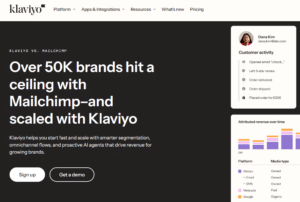
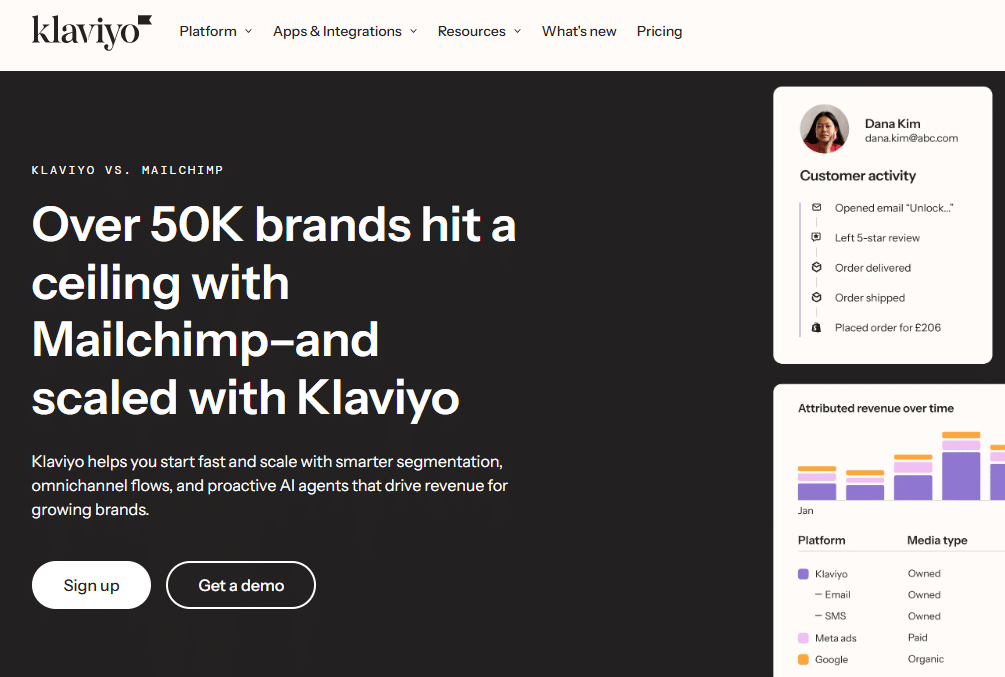
- Mailchimp vs Klaviyo (Kalviyo)
Example revenue forecast
| Keyword | Traffic potential | Signups p/m | Estimated LTV | Booked revenue increase p/m | |
|---|---|---|---|---|---|
| Mailchimp vs Klaviyo | 800 | 24 | £19,200 | £460,800.00 |
These forecasts are created using Ahrefs traffic data, a conservative conversion rate of 3% and estimated LTV. For a more accurate SEO revenue forecast for your own SaaS business, get our free 90 Day SEO Revenue Plan.
Competitor comparison content targets users searching for direct, head-to-head evaluations between two products.
These are buyers who have already narrowed their options and are now deciding which tool to choose.
These searches sit right at the bottom of the funnel. The user understands the category, has shortlisted specific products, and is looking for clarity on which one is the better fit.
Typical examples include:
- “HubSpot vs Salesforce”
- “Asana vs Monday”
- “Mailchimp vs Klaviyo”
- “Notion vs ClickUp”
These queries are highly decisive. The user isn’t browsing – they’re comparing final options before committing.
Why they matter
This is one of the most influential content types in the entire SaaS buying journey.
At this stage, small differences can determine the outcome. Buyers are closely evaluating:
- Features and capabilities
- Pricing and value
- Ease of use
- Fit for their specific use case
Ranking for these terms allows you to directly shape that decision.
These users typically:
- Convert at very high rates
- Have short decision timelines
- Are choosing between a small number of vendors
If your product is positioned effectively, these pages can be the final touchpoint before conversion – turning consideration into action.
How to approach them
Competitor comparison pages need to strike a balance between persuasion and credibility.
They work best when:
- Focused on one clear comparison per page
- Provide a structured, side-by-side breakdown (features, pricing, use cases)
- Highlight key differences in a clear, scannable way
- Honestly acknowledge where each product is strong or weak
- Clearly explain who each product is best suited for
It’s important to avoid overly biased or aggressive positioning. Buyers at this stage are looking for clarity, not sales copy.
When executed well, these pages become powerful conversion assets, helping users make confident decisions and positioning your product as the best choice at the exact moment it matters most.
Industry and profession-specific content
Typical content formats
- Industry landing pages
- Vertical-specific solution pages
- Environment-based use cases
Examples
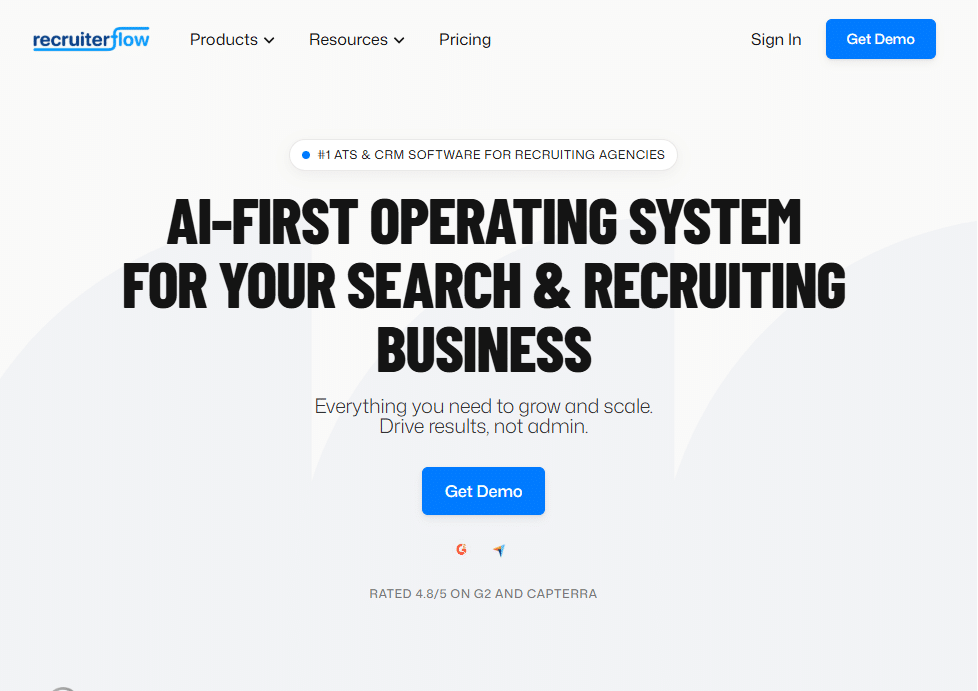
- CRM for recruiters (Recruiter Flow)
- Workflow automation for finance teams (Monday)
- Project Manager CV template (StandOut CV)
Example revenue forecast
| Keyword | Traffic potential | Signups p/m | Estimated LTV | Booked revenue increase p/m | |
|---|---|---|---|---|---|
| crm for recruiters | 1,200 | 36 | £7,500 | £270,000 |
These forecasts are created using Ahrefs traffic data, a conservative conversion rate of 3% and estimated LTV. For a more accurate SEO revenue forecast for your own SaaS business, get our free 90 Day SEO Revenue Plan.
Industry and profession-specific content targets users searching for solutions tailored to their specific sector, role, or working environment. These are buyers who want a product that fits their exact context – not a generic, one-size-fits-all tool.
These searches typically sit in the middle-to-bottom of the funnel. The user understands their problem and the type of solution they need, but is looking for something that aligns with their industry requirements or day-to-day workflows.
Typical examples include:
- “CRM for real estate agents”
- “Accounting software for freelancers”
- “Email marketing for ecommerce brands”
- “Project management tools for construction companies”
These queries are highly valuable because they combine clear intent with strong relevance. The user is effectively saying: “I need a solution like this, but it must work for my situation.”
Why they matter
Industry-specific content is one of the most effective ways to increase both relevance and conversion rates.
Because the messaging is tailored, these pages tend to:
- Resonate more strongly with the target audience
- Convert better than generic product pages
- Attract more qualified leads
They also tend to be less competitive than broad product terms, making them a strong opportunity for faster rankings and consistent traffic.
In many cases, they allow you to capture niche segments at scale. By creating multiple variations across industries, roles, or use cases, you can build a large footprint of highly targeted landing pages.
This approach can be extremely powerful. For example, at StandOut CV, hundreds of job-specific CV template pages (e.g. “accountant CV template”) were created – collectively driving thousands of leads per day by matching highly specific search intent.
How to approach them
Industry and profession-specific pages should be built to show clear alignment between your product and the user’s context.
They work best when:
- Each page is tailored to a specific industry, role, or segment
- Messaging reflects the unique challenges and workflows of that audience
- Features and benefits are framed in a relevant, real-world context
- Examples, case studies, or scenarios reinforce credibility
- Internal links connect users to core product and conversion pages
Avoid simply duplicating the same content with minor keyword changes. The strongest pages demonstrate genuine understanding of the audience and clearly show why your product is the best fit for their specific needs.
Over time, this approach can create a scalable, high-converting acquisition channel, capturing targeted demand across multiple segments and turning it into consistent revenue growth.
Get the 90-Day SaaS SEO Revenue Plan
A proven framework for SaaS teams who need to drive organic MRR fast
The new playbook for SaaS SEO
SEO for SaaS has fundamentally shifted. Informational content no longer drives the traffic or results it once did, as AI tools answer queries without users visiting websites. Instead, growth now comes from high-intent, revenue-focused content that targets buyers closer to conversion.
By prioritising content types like product pages, comparisons, alternatives, use-case pages, and industry-specific content, SaaS companies can attract qualified prospects, influence decisions, and drive consistent MRR growth. The focus is no longer on traffic volume – it’s on capturing demand and turning it into revenue.