

SEO has long been a powerful driver of signups for SaaS companies.
While the landscape has evolved from solely ranking on Google, to gaining visibility in AI tools and platforms like YouTube – the fundamentals haven’t changed.
SEO still delivers strong returns.
But it requires upfront investment, and timing that investment correctly is critical.
As an exited SaaS founder, I learned this first-hand.
In this guide, I’ll break down when SaaS companies should invest in SEO, how much to spend, and what to focus on at each stage of growth.
| Growth Stage | Role of SEO | Focus areas | Suggested investment |
|---|---|---|---|
| Pre product-market fit | Validation tool | Keyword research, core pages, basic setup | £0–£1k (mostly time) |
| Product-market fit (early growth) | Emerging growth channel | BOFU keywords, landing pages, early links | £2k–£5k/month |
| Scaling SaaS | Core acquisition channel | Full funnel content, link building, CRO | £5k–£20k+/month |
| Mature / market leader | Competitive moat | Category ownership, link magnets, expansion | £20k–£100k+/month |
The role of SEO in SaaS growth 📈
Before looking at timing, it’s important to understand what SEO actually does for a SaaS business.
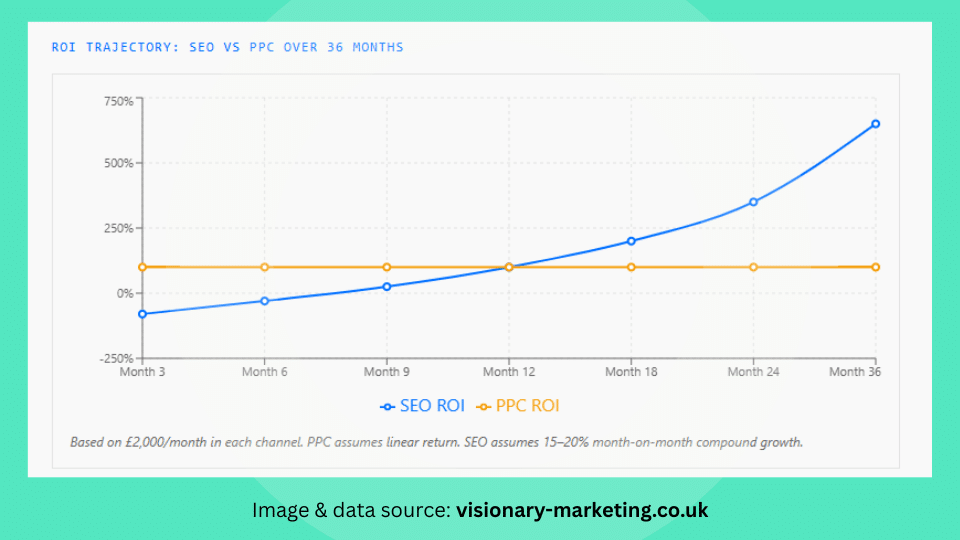
Unlike paid acquisition, which delivers immediate but temporary results, SEO is a compounding channel.
You invest upfront in content, links, and infrastructure – and over time, that investment generates consistent, high-intent traffic without paying for every click.
But SEO is not a quick win.
It takes time to build authority, earn rankings, and generate meaningful traffic.
SEO impact grows in months and years. Not days and weeks
That’s why timing your investment correctly is critical.
Invest in SEO too late, and you’ll struggle to catch up.
Invest too early, and you’ll burn through much-needed cash before you see the returns.
Stage 1
Pre product-market fit
At this stage, SaaS businesses are still figuring it out.
You might have a working product, but your positioning isn’t fully worked out, your ICP (Ideal Client Profile) is still evolving, and you’re focused on landing those first paying customers.
This is not the time to throw everything into SEO
But it is the time to use SEO as a validation tool and lay the foundations for future growth.
SEO approach for this stage
Heavy investment in SEO isn’t needed yet – but ignoring it completely will lead to problems down the line.
The goal here isn’t traffic.
It’s understanding whether real demand exists and setting yourself up to scale later.
Early keyword research (market validation)
Use SEO tools like Ahrefs to identify whether people are actively searching for products like yours.
Focus on buying intent keywords such as:
- “[category] software”
- “best tools for [use case]”
- “[competitor] alternatives”
This helps answer critical questions:
- Does demand already exist for this category?
- What language do customers actually use?
- Who already owns the search results?
Technical website setup
Create a solid environment for future growth, by getting the right foundations in place
- Fast, reliable hosting
- Clean site structure
- An SEO-friendly and easy-to-use CMS like WordPress
You don’t need perfection now – just avoid creating problems you’ll have to fix later.
Core website pages (clear positioning)
Your homepage and key pages should clearly explain:
- What your product does
- Who it’s for
- What problem it solves
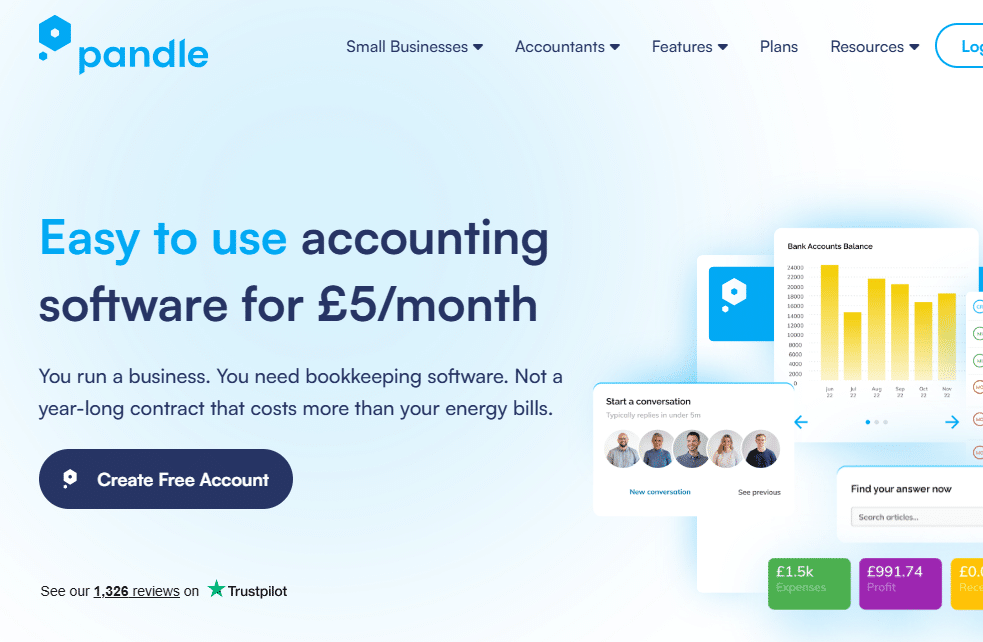
At this stage, you don;t need to agonise over the design and content – Search engines just need clear signals to start understanding what the site is about.
1 piece of pillar content
Create an in-depth guide around your core topic – aim for it to be the best resource in the space.
This should ideally be written by the founder or someone close to the product, and focused on:
- The core problem your audience faces
- How it’s typically solved
- Where your product fits
Think of this as your first “stake in the ground” for topical authority.
Basic tracking setup
Even with low traffic, you need to understand where visitors come from and what they do on your site.
- Set up Google Analytics and Search Console
- Track signups, demos, or email captures
You won’t get tons of data initially, but you’re looking for early signals on what’s working.
Who to hire at this stage? 🙍♂️
Before product-market fit, avoid long-term SEO hires or agency retainers.
This work is best handled by:
- Founders
- Early marketing hires
- Occasional freelancers (for dev or technical setup)
Keep it lean and flexible.
What to avoid at this stage ❌
- Link building – Way too early and very costly. You’ll get far more value from improving the product and messaging.
- High-volume publishing – Search engines don’t trust new sites yet. Publishing dozens of articles won’t move the needle and often leads to wasted effort.
- Chasing traffic over intent – Informational content might bring visitors, but it won’t validate your business. Focus on keywords that indicate buying intent.
How much to spend at this stage?
Spend as little as possible right now.
There’s no need for ongoing retainers or large budgets.
Most of this work can be handled internally, with occasional freelance support where needed.
A budget of £1k per month should be more than enough.
What results to expect
SEO work done at this stage is unlikely to generate meaningful traffic in the short term.
That’s not the point.
The goal is to:
- Validate demand
- Refine positioning
- Send early topical authority signals
- Create a solid foundation to build on.
In other words, you’re planting seeds that will compound once product-market fit is achieved, and you can afford to invest further
Stage 2
Product-market fit achieved (early growth)
At this stage, things are starting to click.
You’ve validated your product, you understand your ICP, and you’re generating consistent signups or revenue.
Now the focus shifts from validation to growth.
This is where SEO starts showing signs of becoming a serious acquisition channel – but in most cases, paid marketing will still be the primary growth driver.
SEO approach for this stage
This is the point where a small amount of SEO investment makes sense.
But it’s important to understand the role SEO plays alongside paid.
Paid channels (Google Ads, paid social etc.) will typically drive:
- Immediate traffic
- Fast feedback loops
- Predictable acquisition
SEO, on the other hand, is slower, but builds a compounding, lower-CAC channel over time.
The goal is not to replace paid.
It’s to build organic acquisition in parallel, so that you’re not fully reliant on paid long term.
Build landing pages for bottom-of-funnel (BOFU) keywords first
These are the keywords closest to conversion – where users are actively looking for solutions.
Prioritise content for high-intent keyword:
- “best [category] software”
- “[competitor] alternatives”
- “[category] tools”
- “[use case] software”
These often overlap heavily with your paid search campaigns – so you should already know which terms to target by now.

If a keyword is converting in paid, it’s a strong candidate for SEO.
Use paid data to guide SEO strategy
One of your biggest advantages at this stage is paid performance data.
Use it to:
- Identify high-converting keywords
- Understand messaging that resonates
- Prioritise which pages to build first
This reduces guesswork and ensures SEO efforts are tied directly to revenue.
Build best-in-class landing pages
Landing pages targeting high-intent keywords need to do two things:
Rank and convert.
To achieve both of these goals, each page should:
- Clearly match search intent
- Mirror proven paid messaging
- Position your product against competitors
- Include social proof like testimonials and reviews
- Drive users towards a signup, demo, or trial
Think of these pages as 24/7 sales assets, not just content.
Study what the current high ranking pages are doing – and aim to create something that beats them all.
SaaS SEO moves fast. Don’t get left behind
Follow me on LinkedIn to see what’s working this week, not last year.

Start building topical depth (selectively)
Once your core commercial pages are live, begin expanding into closely related topics.
But stay tightly aligned to revenue:
- Use case pages
- Industry-specific pages
- Feature-led content
Avoid going too far into top-of-funnel content too early – it’s slower to convert and harder to justify compared to paid.
Introduce link building
Link building now starts to matter.
You don’t need huge volume, but you do need to get started:
Focus on acquiring highly relevant links from websites in your industry.
This won’t have an instant effect, but it will help your commercial pages rank faster and compete with established players in the long-run.
Some easy ways to earn early links are:
- Integration partner websites
- Founder interviews
- Content partnerships with suppliers
Strengthen internal linking and site structure
As you add more pages:
- Link related content together
- Point authority towards key commercial pages
- Use consistent, keyword-aligned anchor text
This is one of the simplest ways to improve rankings without increasing spend.
Double down on tracking and attribution
SEO is now becoming a growth channel, so it needs to be measured properly.
Track:
- Conversions from organic traffic
- Landing page performance
- Keyword to signup pathways
Alongside:
- Paid CAC
- Conversion rates by channel
This allows you to compare performance and gradually shift budget over time.
Get the 90-Day SaaS SEO Revenue Plan
A proven framework for SaaS teams who need to drive organic MRR fast
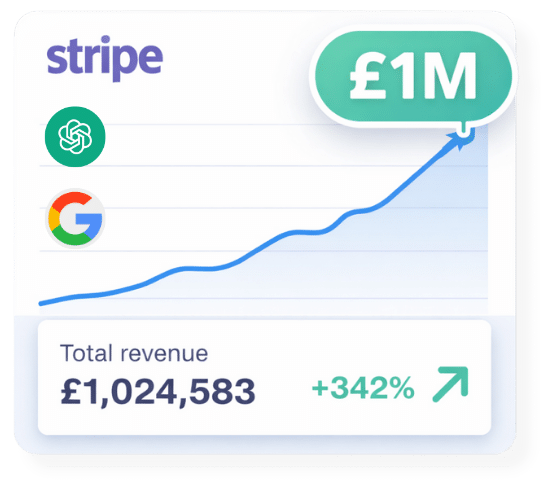
What SEO vs paid marketing looks like at this stage
For most SaaS companies, paid will still be doing the heavy lifting.
Typical focus areas:
- Google Ads targeting high-intent keywords
- Retargeting campaigns to capture lost visitors
- Paid social to generate demand
Paid gives you:
- Speed
- Volume
- Immediate validation
But it also comes with rising costs and limited scalability over time.
That’s why SEO is being built in parallel, as a long-term growth strategy that reduces reliance on paid.
Who to hire at this stage? 🙍♂️
This is typically the point where founders bring in support, but to alleviate the workload and bring expertise onboard.
- A dedicated SEO hire, or a marketing lead with sound SEO knowledge
- Freelancers for content writing
What to avoid at this stage ❌
- Over-investing in SEO too early – If paid is still working well, don’t prematurely shift large budgets into SEO.
- Ignoring SEO because paid is working – This is just as dangerous – it creates long-term dependency on paid channels.
- Outsourcing heavily – Bringing in a full-service SEO agency or even outsourcing link building is likely to be too expensive at this stage.
How much to spend at this stage?
This is where SEO budget starts to become justifiable – but don’t go crazy just yet.
A typical range for a B2B Saas might be £2k–£5k per month
Alongside a significantly larger paid budget in most cases.
The key is to invest enough in SEO to build momentum without compromising paid performance.
What results to expect?
At this stage, paid will drive the majority of results.
But SEO should begin to show:
- Early rankings for long-tail, high-intent keywords
- Citations and recommendation from ChatGPT and AI overviews
- First conversions from organic traffic
- Clear signals that SEO can scale
This is the stage where SEO moves from a “nice to have” to a real revenue driver – setting the foundation to reduce CAC and scale more efficiently over time.
Stage 3
Scaling SaaS (repeatable growth)
At this stage, your growth engine is working.
You have:
- A proven product
- A clear ICP
- Consistent acquisition from paid and SEO
Now the challenge becomes scaling organic acquisition efficiently.
Paid is still important, but costs are rising, competition is increasing, and there’s a limit to how far you can push it.
This is where SEO starts to move from a supporting channel to your number one driver of MRR growth
SEO approach for this stage
SEO is no longer experimental.
You’ve seen early results, validated that it can drive conversions, and now it’s time to scale it.
The goal shifts from:
“Can SEO work for us?”
to
“How can we scale it safely and effectively?”
Build a full-funnel SEO strategy
At this stage, you expand beyond just BOFU content.
You should now be covering:
- Bottom of funnel (BOFU)
High-intent, conversion-driven keywords (your foundation) - Middle of funnel (MOFU)
Comparisons, use cases, integrations, “how it works” content - Top of funnel (TOFU)
Educational content that builds awareness and captures early demand
This creates a system where:
- TOFU brings in traffic, AI visibility and brand awareness
- MOFU nurtures prospect and builds trust
- BOFU converts demos, trials and signups
Build a publishing schedule
You need to move from ad-hoc content to consistent, scalable production:
- Regular publishing schedule
- Clear content roadmap based on keyword data
- Repeatable briefs and templates
- Defined roles (writers, editors, SEO leads)
Consistency matters most.
Scale link acquisition
At this level, links become a major ranking lever.
You should be:
- Actively acquiring high-quality backlinks every month
- Investing in strategies that attract links at scale (digital PR, data studies, linkable assets)
- Supporting key commercial pages with link authority
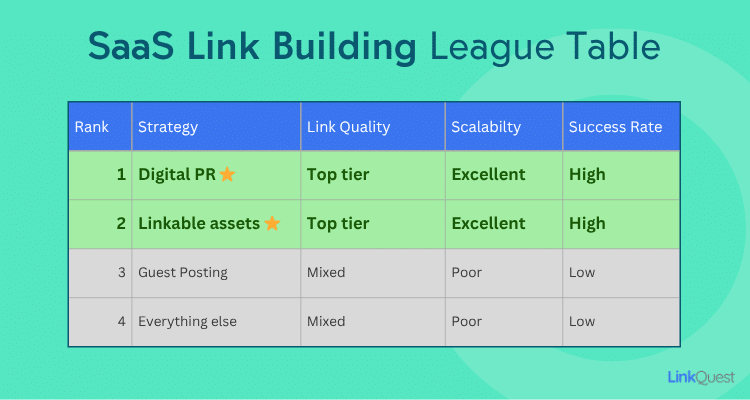
Without this, content will struggle to compete in more competitive SERPs.
Optimise for conversion, not just traffic
More traffic alone won’t drive growth.
You need to continuously improve:
- Landing page conversion rates
- Messaging and positioning
- Pathways from TOFU to BOFU onsite
- Calls to action
SEO traffic should convert at a level comparable to (or better than) paid ads.
Strengthen technical SEO and site architecture
As your site grows, complexity increases.
Without regular attention paid to technical SEO, sites can become messy, bloated and confusing to search engines.
Focus on:
- Clean internal linking structures
- Crawlability and indexation
- Page speed and performance
- Avoiding duplication and cannibalisation
Technical SEO becomes more important as you scale, and the site becomes larger
Expand into adjacent keyword categories
Once your core terms are performing, start widening your reach:
- New use cases
- New industries
- Feature-specific searches
- Problem-based queries
This is how you grow total addressable search demand.
SaaS SEO moves fast. Don’t get left behind
Follow me on LinkedIn to see what’s working this week, not last year.
How paid marketing fits at this stage
Paid is still a key part of your growth mix – but its role starts to change.
Instead of being the primary driver, paid becomes:
- A way to scale quickly in new areas
- A testing ground for messaging and offers
- A retargeting engine to capture SEO traffic
You may start to notice:
- Rising CPCs
- Diminishing returns on spend
- Increased competition in auctions
At the same time, SEO begins to deliver:
- Lower cost per acquisition over time
- More consistent inbound demand
- Higher margins on acquired customers
This is where the balance starts to shift.
Who to hire at this stage? 🙍♂️
SEO now requires dedicated resources.
Typical setup:
- In-house SEO lead
- Content writers (in-house or freelance)
- Link building/digital PR support (In house or agency)
- Technical SEO support (as needed)
Or:
- A specialist SaaS SEO agency with proven results
Execution speed and quality are critical at this level.
What to avoid at this stage ❌
- Scaling content without strategy – Publishing more doesn’t equal growth – every piece should have a clear purpose.
- Neglecting links – Content alone won’t compete in more competitive spaces.
- Buying links – Links that move the needle come from relevant, authoritative sites – earned through strong content and relationships. Paid links sold individually are typically low-quality and deliver little to no real value.
- Ignoring conversion optimisation
Traffic without conversion is wasted potential. - Letting paid dominate indefinitely
Over-reliance on paid will limit long-term scalability and margins.
How much to spend at this stage?
This is where SEO becomes a serious line item.
Typical range:
- £5k–£20k+ per month
- Increasing as ROI becomes proven and predictable
What results to expect
At this stage, SEO should start to deliver:
- Consistent, compounding traffic growth
- High visibility and strong recommendations from AI search
- A steady flow of qualified signups
- Decreasing reliance on paid channels
This is where SEO becomes a predictable growth engine, not just a supporting channel.
And for many SaaS companies, this is the point where SEO starts to drive a significant share of new MRR.
Stage 4
Mature SaaS (market leader)
At this stage, you’re no longer trying to prove or scale SEO.
You’re using it to dominate your category and defend your position.
SEO approach for this stage
Now SEO becomes a competitive moat.
The focus shifts to:
- Owning entire keyword categories (not just individual terms)
- Expanding into new markets, use cases, and geographies
- Creating assets competitors can’t easily replicate
This often includes:
- Large-scale content coverage across the funnel
- “Link magnet” assets (data studies, tools, stats pages)
- International SEO and localisation
- Maximising SERP real estate (featured snippets, video, AI visibility)
How paid marketing fits at this stage
Paid becomes more strategic than foundational.
Used for:
- Defending branded terms
- Supporting new launches or markets
- Retargeting and conversion capture
SEO, by this point, is typically delivering a significant share of acquisition at a lower CAC.
Team and investment
SEO is now a major function within the business:
- Dedicated in-house team
- Ongoing link acquisition and digital PR
- Significant monthly investment (£20k–£100k+)
Execution is continuous and highly strategic.
What to avoid
- Slowing down investment (opens the door to competitors)
- Failing to defend key rankings
- Allowing content to become dated and obsolete
- Relying on past success without continued innovation
What founders should expect
SEO at this stage should:
- Drive a large share of new signups
- Deliver strong, sustainable CAC advantages
- Act as a long-term growth and defensibility channel
The best SaaS companies don’t just dabble in SEO at this stage, they own their search category.
Time your investment wisely
SEO isn’t a channel you switch on, it’s one you commit to long-term
In the early stages, it helps validate demand and shape positioning. Once product-market fit is achieved, it becomes a scalable acquisition channel. And at scale, it turns into a compounding growth engine that reduces CAC and drives consistent pipeline.
The key is timing your investment correctly:
- Start early, but keep it lean
- Invest seriously once you’ve proven demand
- Scale aggressively once it’s delivering results
SaaS companies that get this right don’t just generate more traffic – they build more profitable companies.
And over time, that has a direct impact on company valuation.
Predictable, low-CAC acquisition from organic search makes revenue more efficient, margins stronger, and growth more sustainable – all things investors look for.
In short, SEO isn’t just a marketing channel.
It’s a long-term asset that can significantly increase the value of your business.
Get the 90-Day SaaS SEO Revenue Plan
A proven framework for SaaS teams who need to drive organic MRR fast