

SEO is one of the most reliable ways for SaaS companies to grow long-term MRR and increase company valuation.
Despite all the recent AI-driven disruption in the search landscape, it remains one of the most effective (and cost-efficient) ways to attract and convert ideal customers – with organic search driving around 53% of all web traffic.
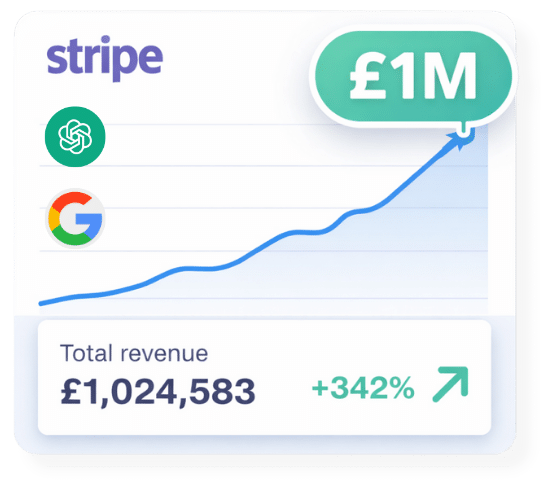
I built and scaled my own SaaS product to £1M in revenue using SEO as the primary growth channel, before recently selling the business for a mid six-figure sum.
I know that SEO can feel confusing and overwhelming at times, but in this guide I’ll show exactly how SaaS companies can use it to scale MRR in a predictable way.
The 3 core benefits of scaling SaaS revenue with SEO
2. Know your customer’s problems
The often-overlooked foundation of all good SaaS SEO strategies
3. Identify profitable keywords
Find revenue driving keywords you can rank for quickly
Create content that outperforms competitors by miles
2 quick and easy technical tweaks that will boost your content’s performance
Earning Backlinks, supporting content and YouTube videos
Why scale with SEO?
Organic search is arguably the most effective way to drive qualified leads to almost any business, but it’s especially powerful for SaaS companies.
SaaS buying cycles tend to be longer, and customers often need time to research solutions, compare tools and understand how a product works before committing. Search is where much of that research happens, making it one of the best channels for capturing potential customers throughout their decision-making process.
Adapt to modern search journeys
AI-powered search hasn’t killed SEO. It’s simply changed the way people search.
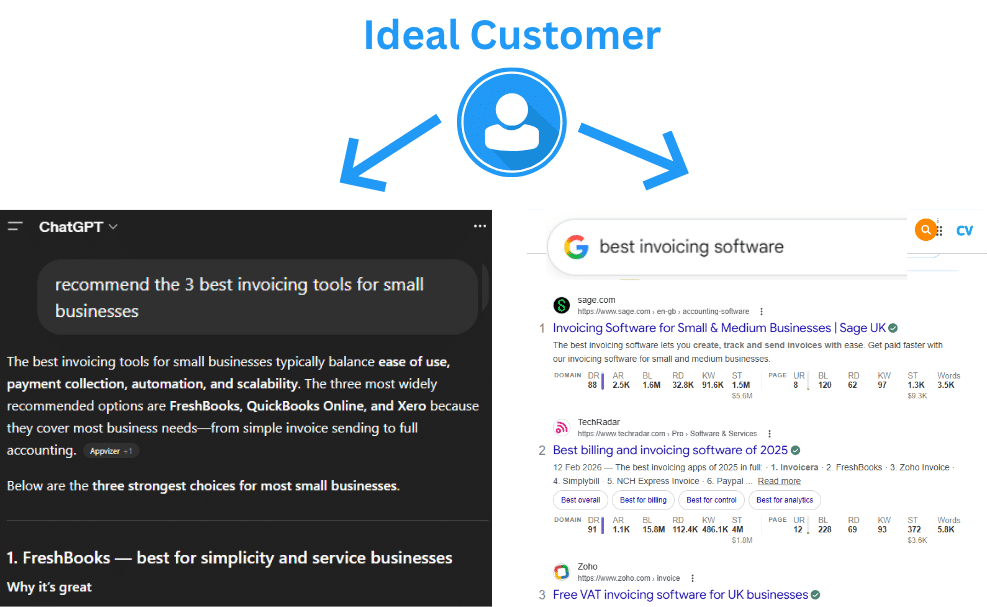
Some users will still run a traditional Google search for something like “best invoicing software”. Others might ask ChatGPT to “recommend the 3 best invoicing tools for small businesses”. Some will do both.
A strong SEO strategy ensures your product appears in both traditional and AI powered search.
Reduce CAC and increase ROI
SEO can significantly reduce customer acquisition cost (CAC) over time.
Paid search channels require ongoing spend to maintain traffic and signups, and costs often rise as competition increases.
SEO works differently.
Once a page ranks well for a high-intent keyword, it can continue bringing in qualified traffic and customers for years, without monthly costs.
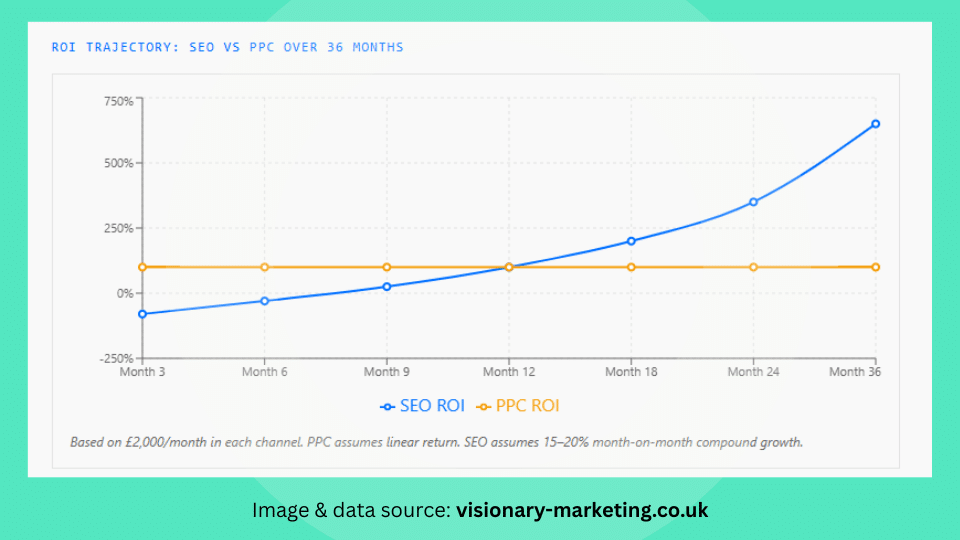
This creates a compounding effect. As your site builds more content and authority, organic traffic grows while your average CAC falls, reducing ROI over the long term.
A recent study from Visionary found that SEO delivers a 3.7x higher ROI than PPC.
Build a digital asset that increases business value
Strong organic traffic can significantly increase the attractiveness of a SaaS business to buyers and investors.
A site that consistently generates leads and signups from search demonstrates predictable demand, strong market positioning, and reduced reliance on paid acquisition. This makes revenue more stable and the growth model easier to scale.
As a result, companies with well-established organic rankings often command higher valuations.
When I sold my SaaS business, StandOut CV, organic traffic was the buyer’s number one focus during due dilegence – far more important to them than paid advertising performance, and even more than the product itself.
Know your customer’s problems inside-out
Before you start researching keywords, it’s important to have a deep understanding of who your ideal customers are and the problems they’re trying to solve.
SEO works best when your content directly addresses the questions, challenges and goals your audience already has. If you truly understand your customers, it becomes much easier to identify the searches they’re making, the topics they care about, and the type of content that will lead them towards your product.
Companies that know their customers well tend to produce SEO content that attracts the right visitors and converts them into users, rather than just generating traffic.
Some simple ways to carry out market research and build this understanding include:
- Speak to customers regularly through interviews or feedback calls
- Analyse sales and support conversations to identify common problems and questions
- Review onboarding feedback to see what challenges new users face
- Study competitor reviews to see what customers like and dislike about other tools
- Work closely with product, sales and customer success teams to understand real user needs
Identify your most achievable & profitable keywords
The first step to increasing MRR with SEO, is to identify keywords that will lead to relatively quick conversions for your product.
This way you can drive sales early (which in SEO terms is 30-90 days) , prove the strategy works, and build SEO-attributed MRR to reinvest.
These keywords should be:
- Commercial – Buying intent behind them (Bottom or Middle Funnel)
- Non-branded – Don’t include your brand name
- Achievable soon – Relatively low competition in relation to your site’s authority
Targeting these keywords will give your site the best chance at generating MRR quickly with SEO.
Here’s where they normally lie for SaaS businesses.
SaaS SEO moves fast. Don’t get left behind
Follow me on LinkedIn to see what’s working this week, not last year.

The 6 revenue diving content types for SaaS
During my time growing StandOut CV and later when working with clients through my SaaS SEO agency – I learnt that the majority of SEO-attributed revenue for SaaS companies comes from 6 content types:
Core product buying pages
Content targeting searches from users actively looking for a solution in your product category. Essentially customers searching directly for your product.
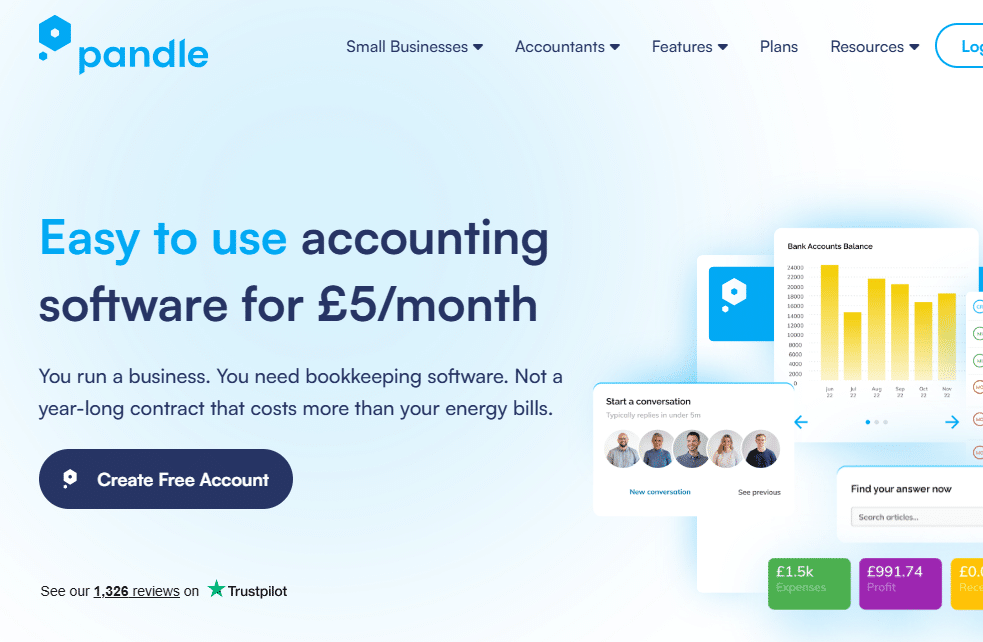
These keywords capture direct purchase intent and typically convert very well because the buyer already knows what they want, and is very close to booking a demo or signing up.
Typical content formats
- Homepage for SaaS products
- Product category pages
- Software/platform landing pages
Examples
- accounting software (Pandle)
- digital signage software (Now Signage)
- ai software testing tool (Monentic)
Caveat: These are often the most competitive terms in any space – so are best suited to mid-long term SEO plans.
“Best” Listicles content
Content targeting searches from buyers comparing options or building a shortlist before making a decision.

These pages influence vendor selection early and often assist conversions even if they’re not the final touchpoint – giving SaaS brands a platform to position themselves as a leading option within the category.
Typical content formats
- “Best X software” pages
- “Best software for [Task]
Examples
- best proposal software (Get Accept)
- best ai chatbots for business (Lindy)
- best ai voice generator (Well Said)
Feature and use-case content
Content targeting searches driven by a specific capability, feature, or problem the product solves.
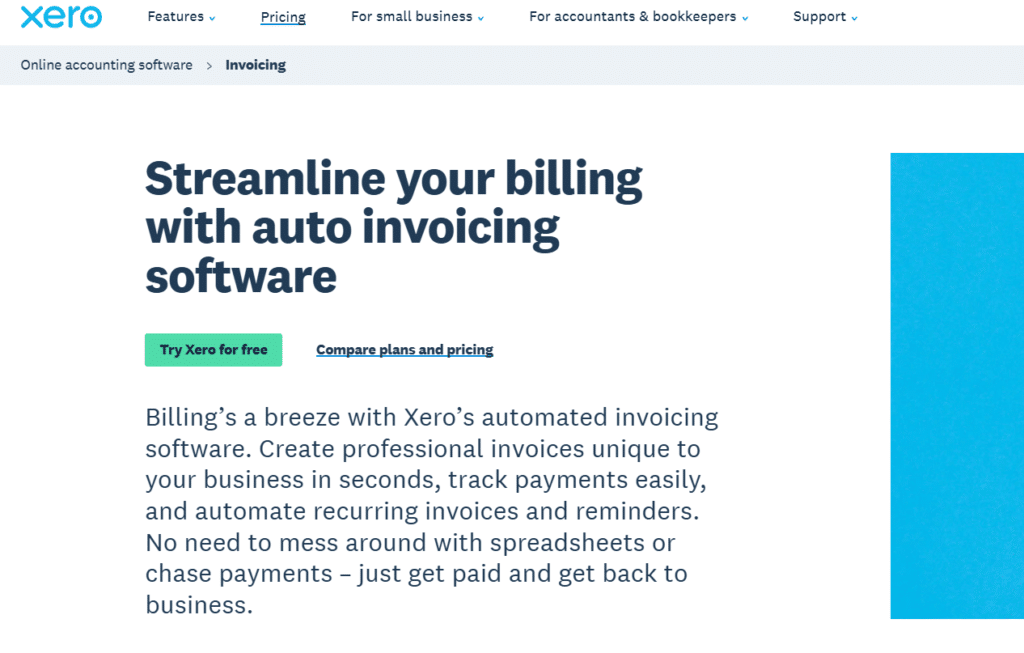
These keywords attract buyers who understand their needs and are evaluating tools that can deliver a specific outcome – often frustrated with a problem and looking for a solution quickly.
Typical content formats
- Use-case landing pages
- Feature-led solution pages
Examples (e.g. within accounting SaaS)
- automated invoicing software (Xero)
- expense tracking for small businesses (Mercury)
- tax compliance software for SMEs (Avalara)
Competitor alternatives content
Content targeting searches from buyers actively looking for a list of alternatives to an existing provider.
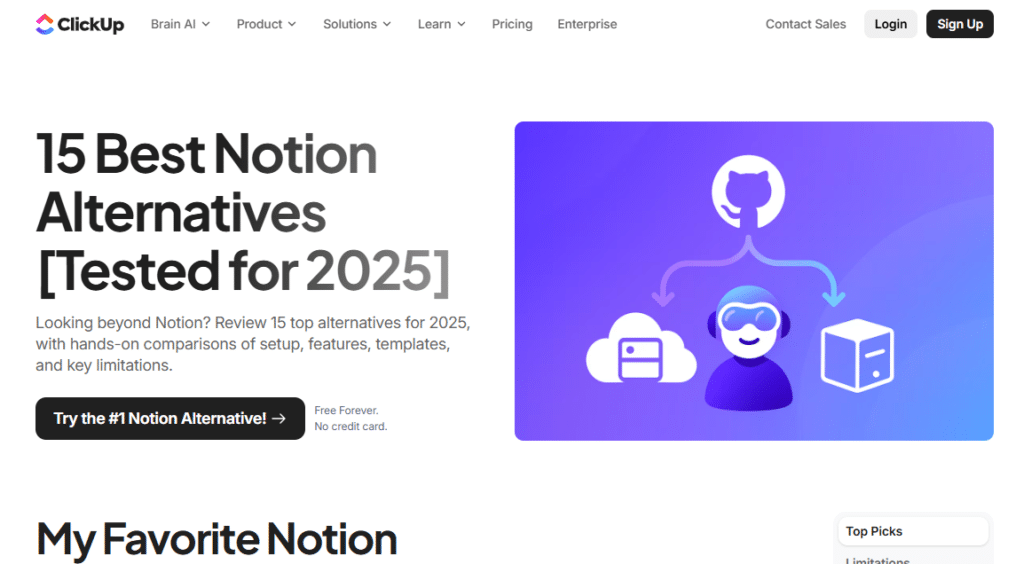
These users are often late-stage in the buying cycle, highly motivated, and comparing solutions with intent to switch soon.
Typical content formats
- “X alternatives” pages
- Comparison-style landing pages
Examples
- Notion alternatives (ClickUp)
- Xero alternatives (Plutio)
- Trello alternatives (Good Day)
Competitor comparison (vs) content
Content targeting direct head-to-head comparisons between two products.
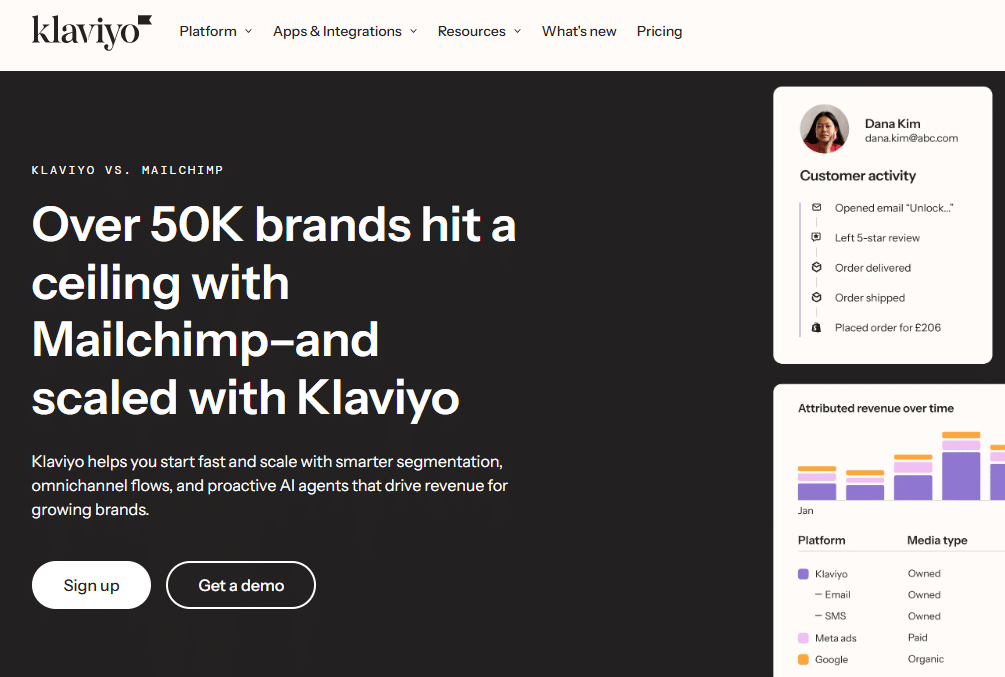
These searches sit very close to the final decision and strongly influence vendor choice, allowing SaaS companies to clearly demonstrate why their product is the better fit.
Typical content formats
- Side-by-side comparison pages
- Feature and pricing comparisons
- “Which is better?” content
Examples
- Asana vs Trello (Asana)
- Sage vs Xero (Sage)
- Mailchimp vs Klaviyo (Kalviyo)
Industry and profession-specific content
Content targeting searches from buyers looking for solutions tailored to their industry or environment.
Industry-specific queries align closely with real buying contexts and often imply higher relevance and conversion rates, combined with lower competition.
At StandOut CV we were able to create hundreds of job-specific CV template pages (e.g. accountant cv template) and they drove thousands of leads to the site daily.
Typical content formats
- Industry landing pages
- Vertical-specific solution pages
- Environment-based use cases
Examples
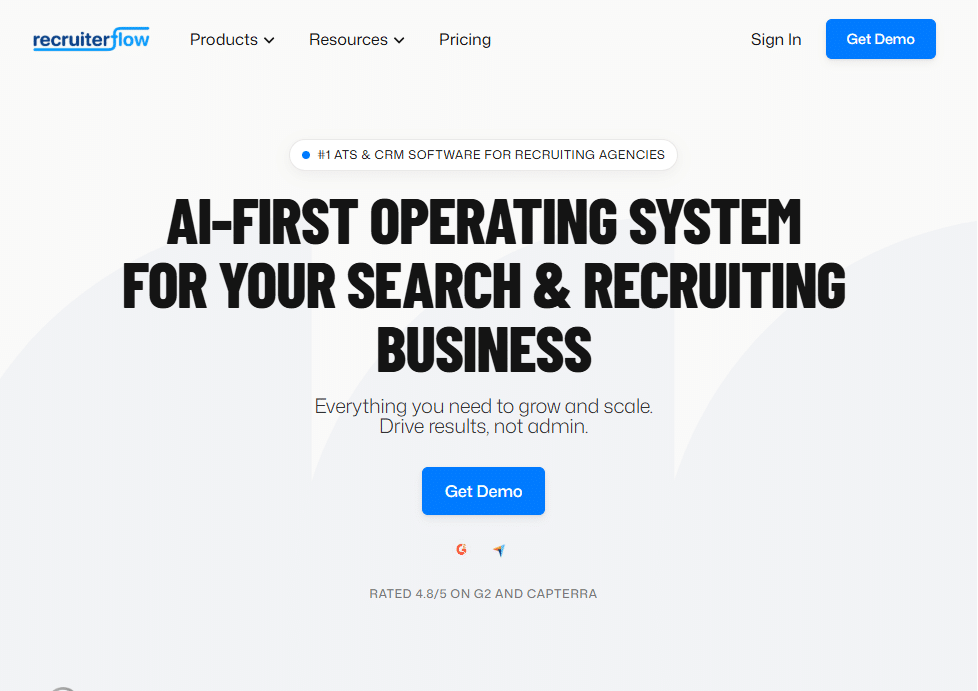
- CRM for recruiters (Recruiter Flow)
- Workflow automation for finance teams (Monday)
- Project Manager CV template (StandOut CV)
Get the 90-Day SaaS SEO Revenue Plan
A proven framework for SaaS teams who need to drive organic MRR fast
How to find profitable keywords that your site can rank for quickly
To key to growing MRR with SEO is finding keywords that:
- Have clear potential to drive direct signups
- Your site has a realistic chance of ranking for within weeks
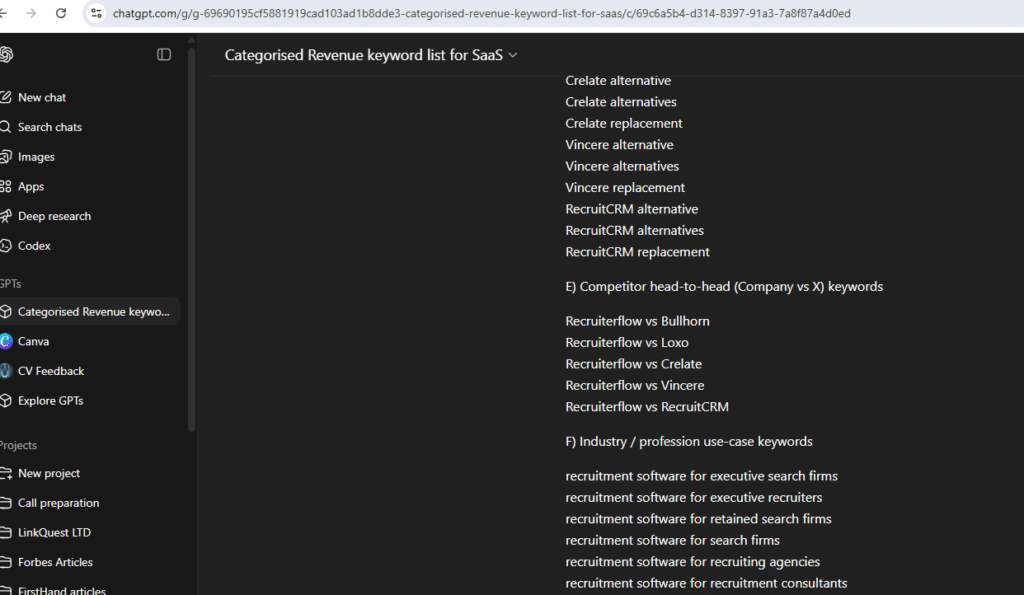
Start by pulling together a list of keywords for each of the six revenue-driving categories mentioned above. Brainstorm with your team and include any keywords you already have content targeting on your site.
To get a head start, you can use my custom categorised SaaS keyword generator GPT. Simply enter your website URL and it will generate a list of keyword ideas for each category. Treat this as a starting point, then refine the list using your own knowledge of the product, customers and market.
Then use an SEO keyword research tool like Ahrefs to pull search data for each keyword – specifically:
- Monthly search volume
- Keyword difficulty
With this data, you and your team can start identifying which keywords are most likely to drive meaningful revenue in the shortest time.
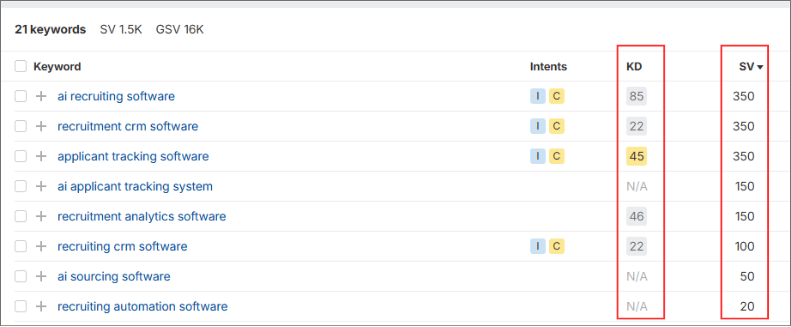
This doesn’t mean simply targeting the keywords with the highest search volume. In the early stages, it’s usually better to focus on lower-competition keywords with clear buying intent and a reasonable amount of traffic.
For example, if you target a keyword with 3,000 monthly searches, high keyword difficulty, and no existing content on your site, it’s unlikely you’ll rank for it quickly – or generate revenue from it anytime soon.
On the other hand, targeting a keyword with around 200 monthly searches, low keyword difficulty, and a page on your site already sitting on page two of Google ; is far more achievable, and much more likely to deliver a positive impact on MRR in the near term.
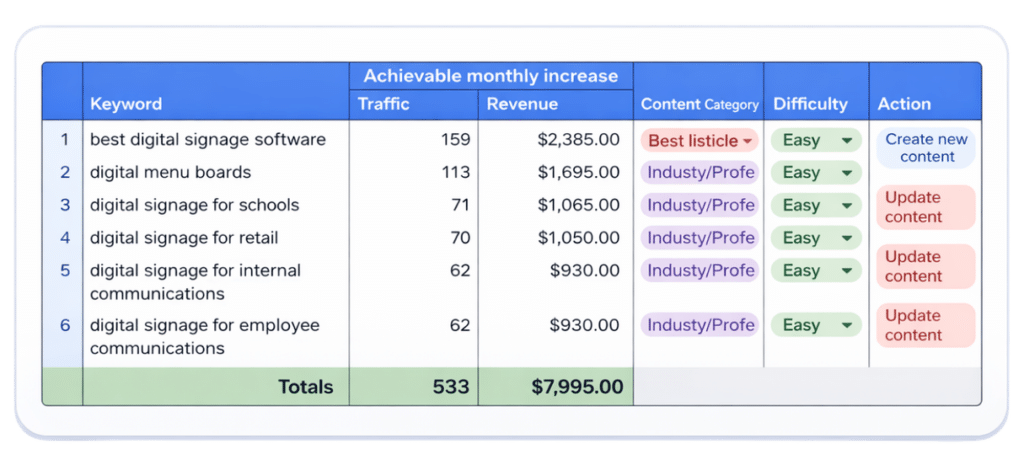
For a more precise way to estimate the revenue potential of each keyword opportunity, we use a custom forecasting model at LinkQuest.
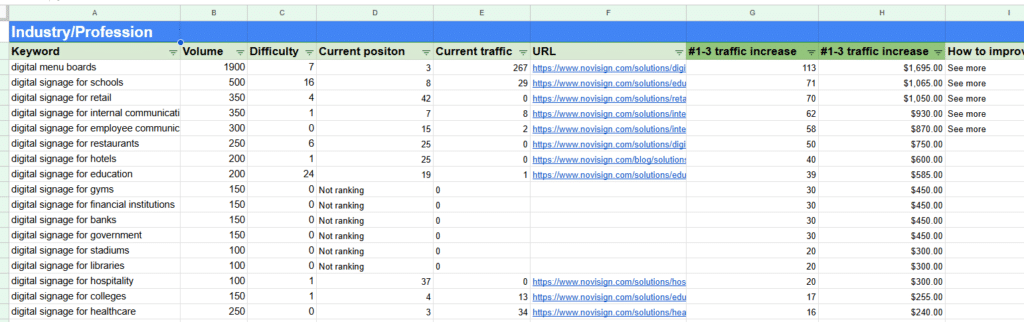
It estimates the monthly revenue uplift that could come from ranking in the top 1–3 positions on Google, based on average customer LTV and conservative conversion assumptions.
To see exactly how the model works, take a look at our free 90-Day SEO Revenue Plan.
How to create SaaS SEO content that ranks and converts
Great SaaS SEO content doesn’t just rank in Google. it attracts high-intent prospects and moves them closer to becoming customers. Here’s how to make sure your content does exactly that.
See what’s already ranking
Start by analysing the top results for your target keyword. Look at what topics they cover, how the page is structured, and what type of content Google is rewarding. Identify any gaps, outdated information, or areas where you can provide more value. Your goal should be to create the most helpful and complete resource on the topic.
Start with attractive and functional layouts
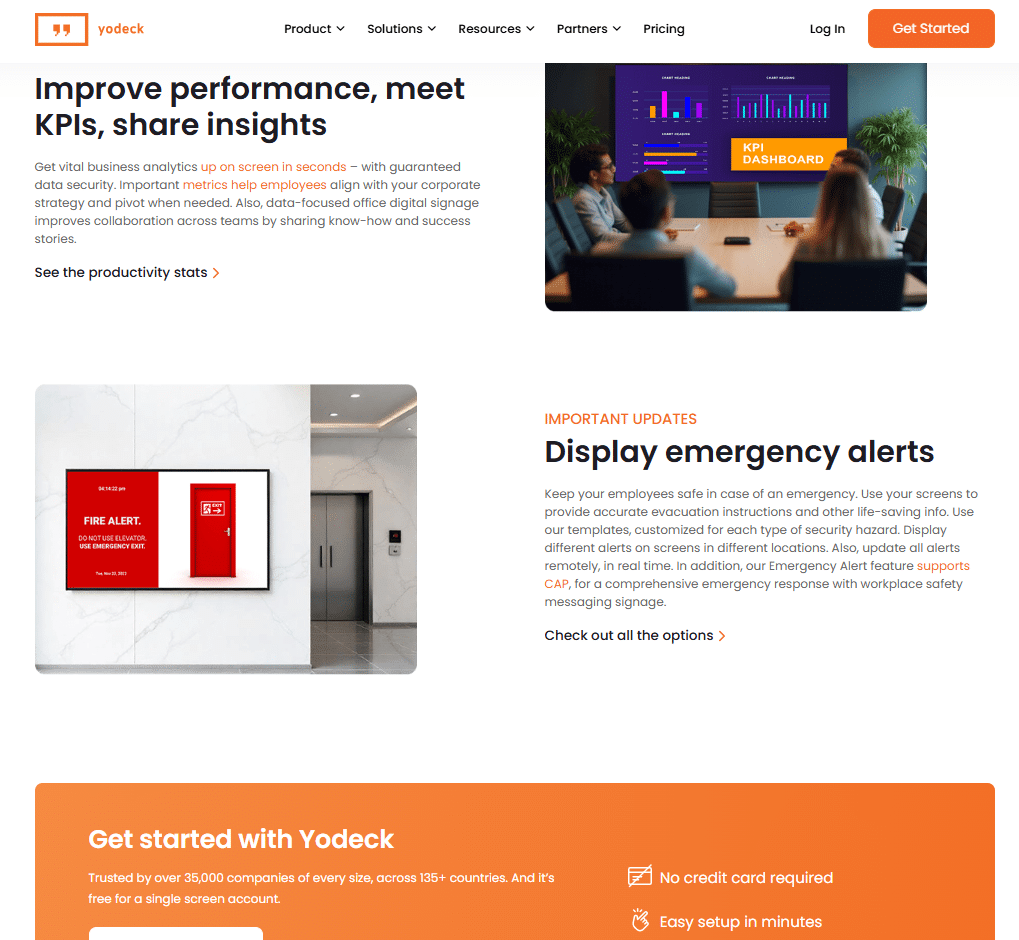
Strong content isn’t just about the words. Clear layouts, clean typography, comparison tables, visuals and well-structured sections make content easier to read and navigate. A well-designed page keeps users engaged for longer and makes complex SaaS topics easier to understand.
Address the search intent fully
Before writing, be clear about what the user is trying to achieve with their search. Are they comparing tools, researching features, or looking for a recommendation? Your page should answer that search intent directly and remove any friction that could stop the user finding what they need.
Create sections for all sub-topics
High-performing organic pages tend to cover a topic comprehensively. Break the page into logical sections that address related questions, features, comparisons and considerations. This helps search engines understand the depth of your content while also making it easier for users to scan.
Add unique images and features
To stand out, your page should offer an experience that can’t easily be replicated in ChatGTP or AI overviews. Custom graphics, product screenshots, comparison tables, interactive tools and original insights all add value and help your content perform better in both search and conversions.
Provide a clear path to conversion
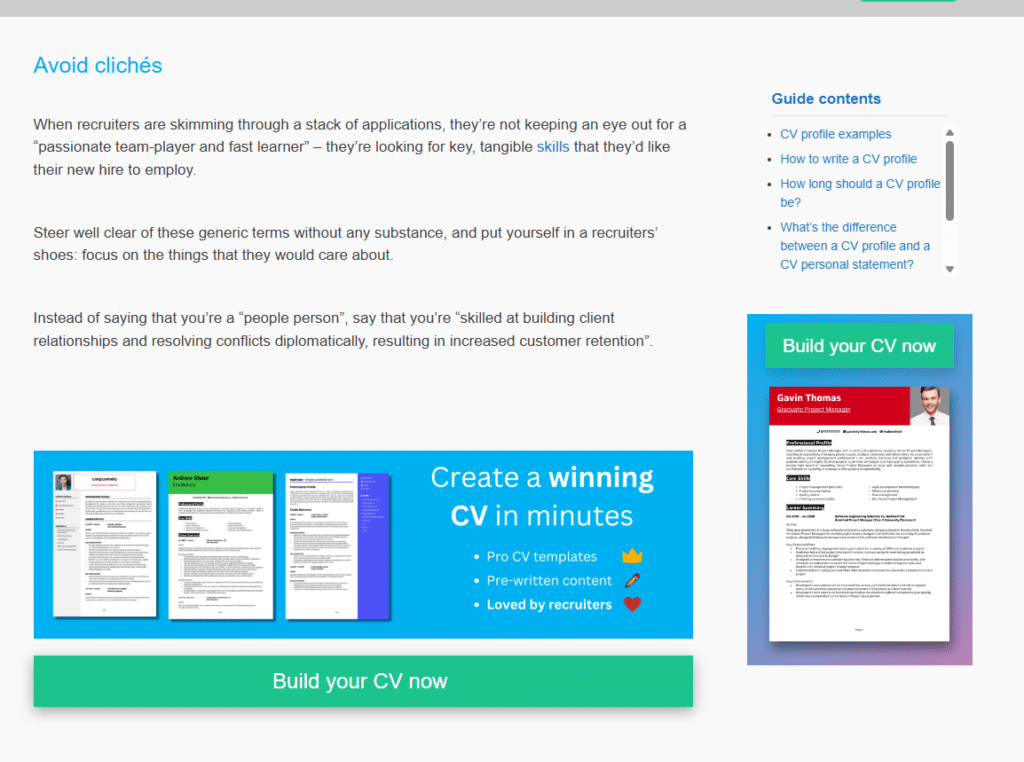
Ranking well is only part of the goal. The page also needs to turn visitors into customers. Make it easy for readers to take the next step by including clear calls-to-action, product mentions where relevant, and simple paths to sign up, book a demo, or start a trial. The best SaaS SEO content naturally guides readers from learning about a problem to choosing your solution.
Add some small technical optimisations
Alongside great content, a few simple technical improvements can help search engines discover and understand your pages more easily.
Add internal links
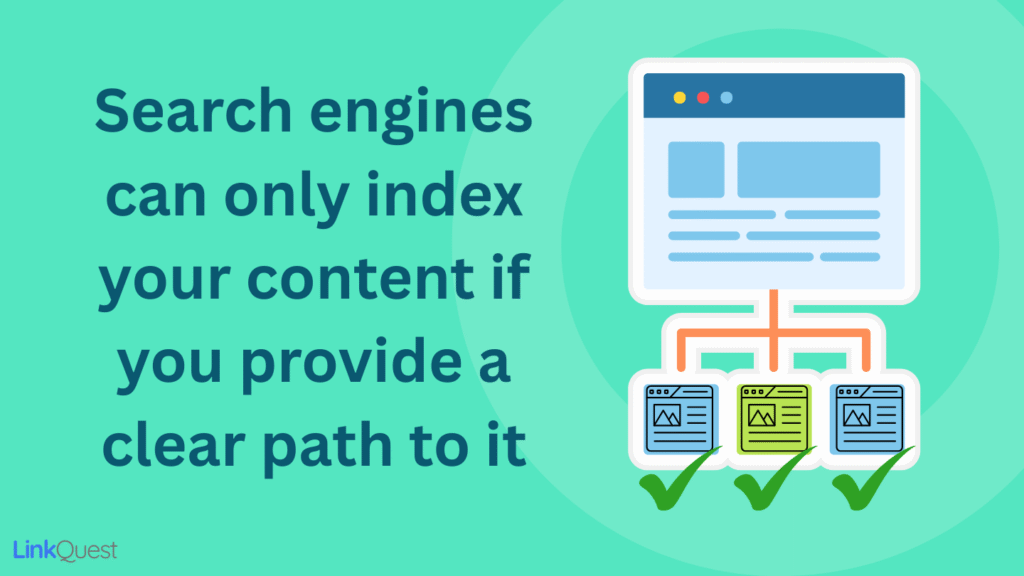
Linking relevant pages together from optimised anchor text helps search engines understand the structure of your site and reinforces the topic of each page. It also helps distribute authority across your site and guides users towards related content.
Tidy up page duplication issues
Duplicate or overlapping pages can dilute ranking signals and confuse search engines. Regularly reviewing your site for duplicate content and consolidating similar pages ensures search engines know which pages to surface.
Extra SEO growth levers
Content and technical SEO will take you a long way, but to achieve the best results in competitive markets, you should add the following three actions to your organic strategy in 2026.
Build a handful of impactful backlinks
Despite ongoing claims that link building is “dead”, backlinks remain one of the most important ranking signals in SEO. Recent studies from Semrush, Ahrefs and Backlinko continue to support this.
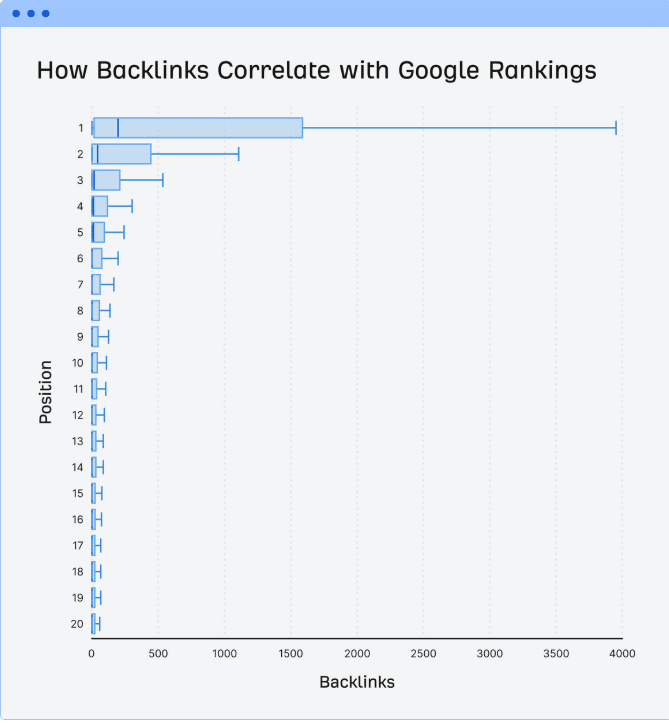
When reputable websites link to your content, it signals to search engines that your site is trustworthy and authoritative.
However, quality and relevance matter far more than volume. A small number of links from respected, relevant websites can have far more impact than hundreds of low-quality ones. Link building is also one of the hardest parts of SEO, which is why many companies get it wrong, see poor results and end up abandoning it.
Over the past 5 years, I’ve primarily used the following link building strategies at StandOut CV and for SaaS client websites.
Existing partnerships – Suppliers, integrations, technology partners and other business relationships can often provide natural opportunities for relatively low-effort links.
Guest articles – Publishing articles on industry sites can generate valuable backlinks and visibility. Founder stories, lessons learned, and case studies tend to perform particularly well in the SaaS world.
Podcast guest appearances – Appearing on podcasts can lead to backlinks from show notes pages, while also helping to build brand awareness.
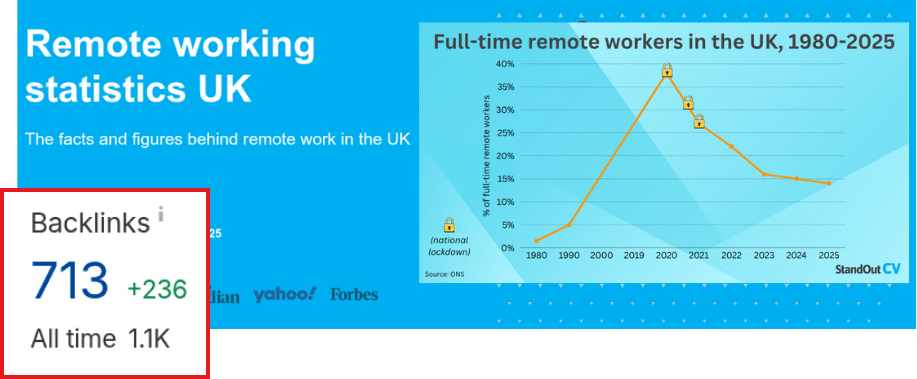
Linkable assets – Tools, original research, data studies and useful resources can naturally attract links passively over time. We used linkable assets to generate thousands of quality backlinks at StandOut CV
Digital PR – For more established companies with larger budgets, digital PR campaigns can generate links from major publications and industry websites.
Bolster the site with informational content
While informational content isn’t the SEO Golden Goose it once was, it still plays an important role in demonstrating expertise and building topical authority. Supporting your commercial pages with helpful educational content helps search engines understand that your site is a trusted resource within your niche – and can attract quality natural backlinks over time.
Some effective formats include:
In-depth guides
Comprehensive articles that explain complex topics and provide genuine value to readers.
Resources
Templates, frameworks, and practical how-to content that helps users solve specific problems.
Listicles
Curated lists of tools, strategies or examples that help users quickly explore their options.
Don’t pour all of your SEO resources into these, but make sure that you have a few quality pillar pieces on the site.
Add a YouTube video to dominate the search results
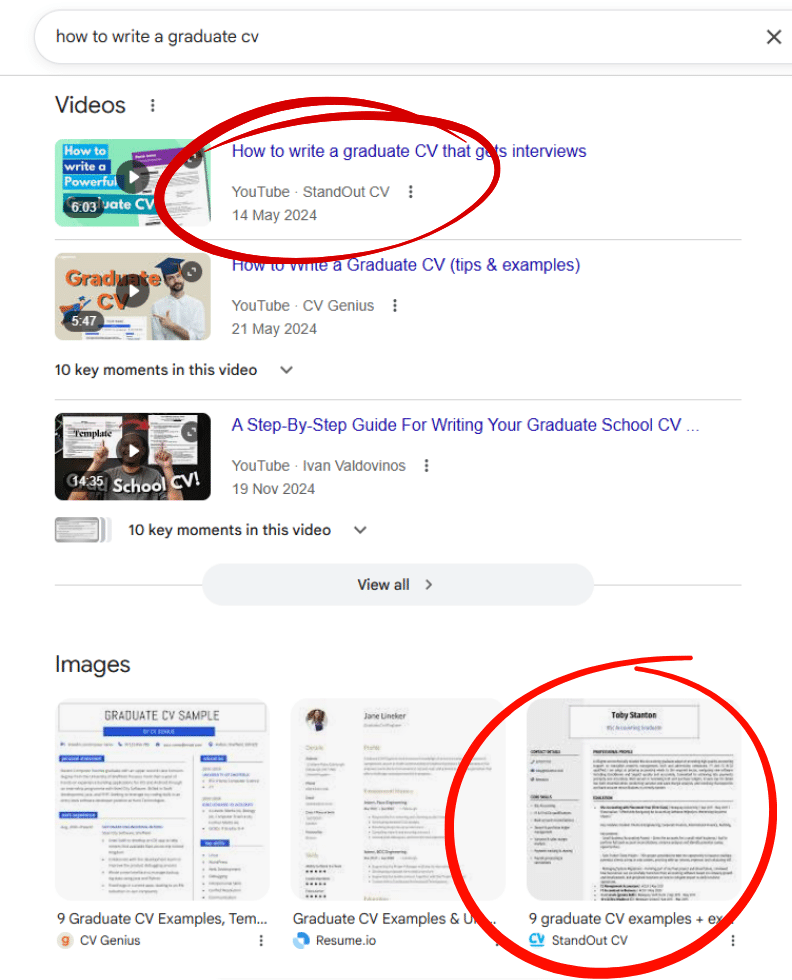
Creating a YouTube video on the same topic as your page can significantly strengthen your SEO performance.
Embedding the video within your article helps increase engagement and time on page, while also reinforcing the topic for search engines.
Publishing the video on YouTube also opens up another discovery channel. Many people now search directly on YouTube when researching software or learning about tools. If your video ranks there, it can bring in a steady stream of additional organic traffic.
It can also help you occupy more space in Google’s search results. It’s quite common for both a video and a webpage on the same topic to appear in the results. When that happens, your brand effectively gets two chances to capture the click – increasing visibility, building credibility, and pushing competitors further down the page.
Build (and stick to) a 12 month plan
SEO rewards long-term consistency, not quick bursts of effort.
To generate meaningful growth in MRR, SaaS companies need a clear long-term plan that combines publishing high-quality content with steadily building authoritative backlinks over time. Sticking to a structured 12-month roadmap helps ensure you’re targeting the right keywords, strengthening your site’s authority, and compounding results month after month.
The companies that see the biggest SEO gains are usually the ones that commit to the process and execute it consistently.
If you want the fastest route to early SEO revenue, start with our free 90-Day SEO Revenue Plan, which shows exactly how to identify high-impact opportunities and turn them into new signups.
Get the 90-Day SaaS SEO Revenue Plan
A proven framework for SaaS teams who need to drive organic MRR fast